
How many restrooms does a farm operation need?
Count workers first, then walk distance. Under 1928.110, hand-labor crews need one facility per 20 employees, and it has to sit within a quarter mile of where people are working, not back at the yard. A five-person detasseling crew near Gilbert, 7.0 miles north of Ames, needs one unit close enough to reach on foot. Bigger operations running two or three fields at once often split units across sites rather than centralize them at one gate. Our how many porta potties do I need guide walks through the math for mixed crews, seasonal labor, and combine crews working staggered hours. Most row-crop and livestock operations around Ames land on a standard unit per crew rather than a shared bank of units, since fields spread out and a single restroom at the barn does nobody in the back forty any good. Pair the toilet with a water source: 1926.51(a)(1) calls for an adequate supply of potable water at every place of employment, which on a farm usually means a jug station or a handwashing station set next to the unit. If chemical handling is part of the job, see the next section before you skip handwashing as optional.
Do farm workers need handwashing stations too?
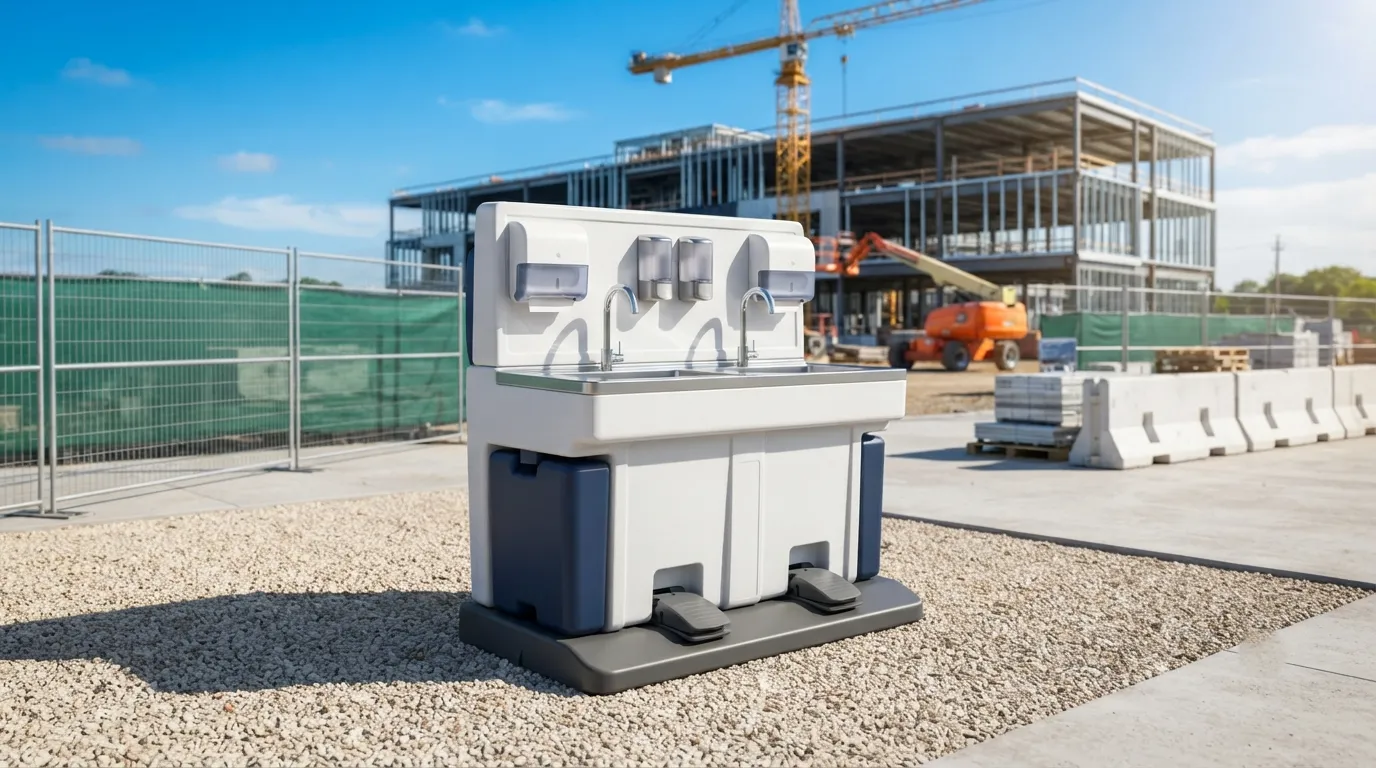
Yes, and the requirement is broader if anyone on the crew handles herbicides or insecticides. OSHA 1926.51(f)(1) requires washing facilities specifically where employees apply paints, coatings, herbicides, or insecticides, which covers most spray days on an Iowa row-crop operation. General crews without chemical exposure still fall under the sanitation requirements in OSHA 1926.51(c). A handwashing station rental or a portable sink rental satisfies that requirement without hauling water from the shop. Under 29 CFR 1910.141(d)(2), any washing facility needs soap and a towel or hand-drying device on hand; a bottle of sanitizer by itself doesn't meet that standard, so budget for the real setup. Spray crews working herbicide or pesticide rounds should station a sink at the field entrance, not back at the truck, so nobody tracks chemical residue into a cab or a lunch cooler. For crews near Huxley, 10.2 miles south of Ames, or Nevada, 9.7 miles east, we deliver both the toilet and the sink together so there's one stop for setup instead of two trucks on two schedules. A standard unit here runs a 60 to 70 gallon holding tank, which covers a small crew for a full work week between services under the ANSI/PSAI Z4.3 baseline interval, one service visit per week for up to 10 users over a 40 hour week. Larger crews or longer harvest stretches need tighter service intervals, which we set at delivery.
What does a farm restroom rental cost?
Farm rentals price close to standard job-site rates, with the difference showing up in delivery distance more than the unit itself. A single unit for a week runs in line with any construction rental, and multi-week harvest contracts often land in the monthly range instead. Here's how it breaks down:
| unit | duration | typical price |
|---|---|---|
| standard | day | $150 |
| standard | week | $200 |
| standard | month | $200 |
| delivery_fee | week | $100 |
| delivery_fee | month | $172 |
Fields further from Ames cost more to service simply because of drive time, not because the toilet itself changes. Boone sits 16.6 miles west of Ames, and a farm out that way pays a delivery fee closer to the higher end of that band. Operations closer in, inside that 7 to 10 mile ring around towns like Gilbert or Huxley, usually land near the low end. If your operation also needs waste hauled off after a building project or equipment cleanout, check roll-off dumpster rental or construction dumpster rental options, since a lot of farm sites run both a restroom and a dumpster on the same delivery. For full pricing detail across unit types, see porta potty rental cost and monthly porta potty rental.
Bigger operations running bunkhouses or seasonal labor crews sometimes need more than a single toilet. A restroom trailer rental or a 4 stall restroom trailer handles a larger crew better than scattering single units, especially if housing is on-site for the season. For county fair vendors or ag show booths near Ames, our county fair restrooms and farm and agricultural restrooms setups overlap, since both need units that survive a long outdoor stretch without daily attention. Winter calving season brings its own issues, covered in porta potty in winter, where freeze protection matters more than tank size. If a storage need comes up alongside the restroom, a storage container rental or 20ft storage container keeps tools and parts secure through the season. Emergency situations, like a unit damaged by equipment or a sudden crew expansion at harvest, are covered under emergency porta potty rental.
Can one unit serve multiple fields on the same farm?
Not if the fields are far apart. The quarter mile walk limit under 1928.110 means a unit at one field doesn't count for a crew working a different field a mile away. Order one unit per work site instead, and rotate service days to match where the crew actually is.
How often does a farm restroom get serviced?
Weekly is standard under the ANSI/PSAI Z4.3 baseline for crews of 10 or fewer. Bigger crews or full harvest weeks need twice-weekly service. We set the schedule at delivery based on crew size and how long the unit stays on site.
Do you deliver to farms outside Ames city limits?
Yes. We service the fields and yards around Ames along with nearby towns, including Gilbert, Nevada, Huxley, Boone, and Ankeny. Delivery fees scale with drive distance, so a field close to Ames costs less to service than one further out.
What size unit works best for a small crew?
A standard unit with a 60 to 70 gallon tank covers most crews of five to ten workers for a full week between services. Larger seasonal crews may need a second unit or a tighter service schedule instead of a bigger tank.
Can we rent a handwashing station without a toilet?
Yes. A portable sink rental or hand sanitizer station rental can go out on its own, though most farm crews order both together to cover 1926.51(f)(1) washing requirements for herbicide and insecticide handling in one delivery.
Next step
Get a delivery date
Tell us the address, the dates and the headcount. We size the order and confirm the route.